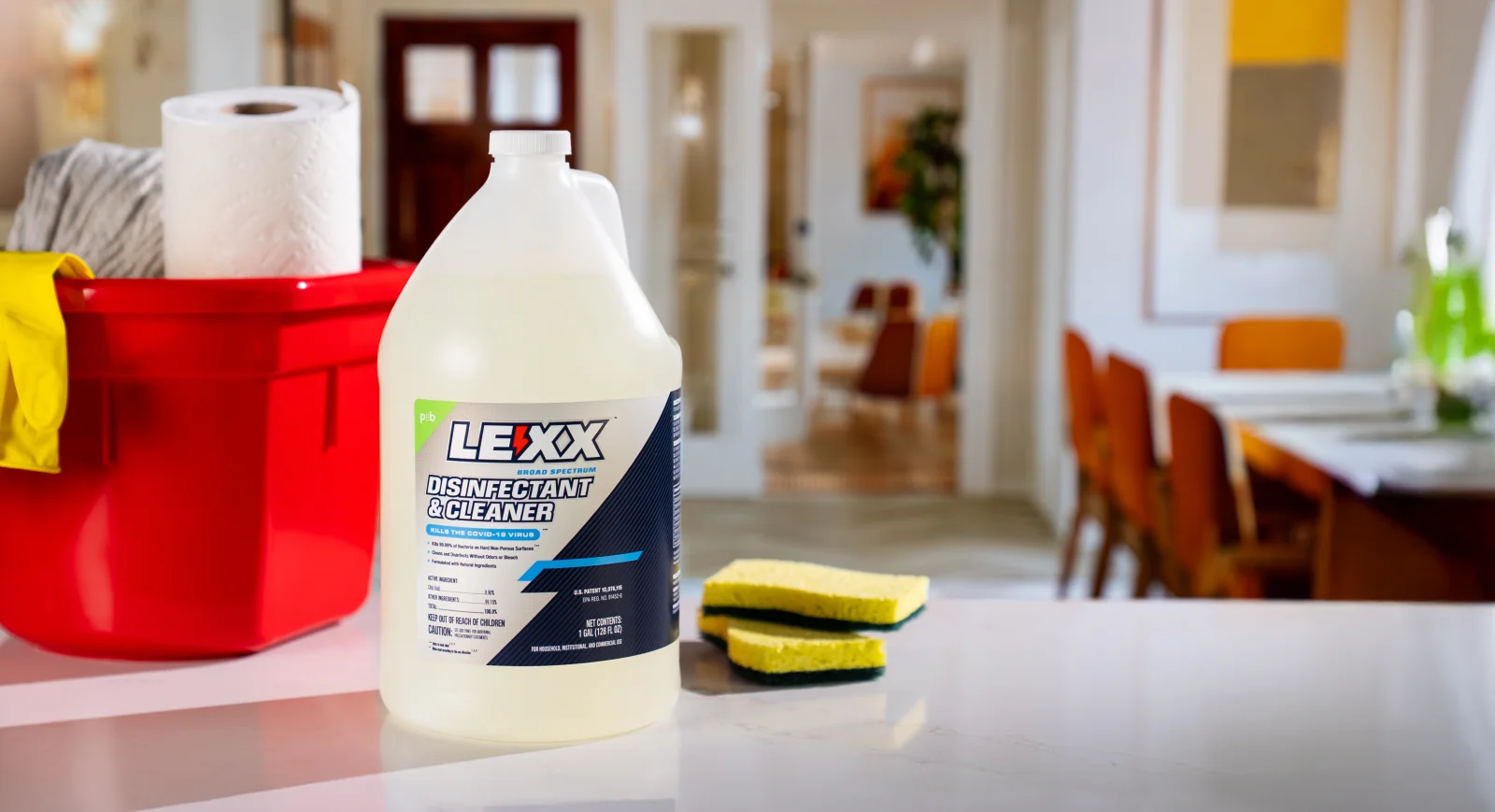

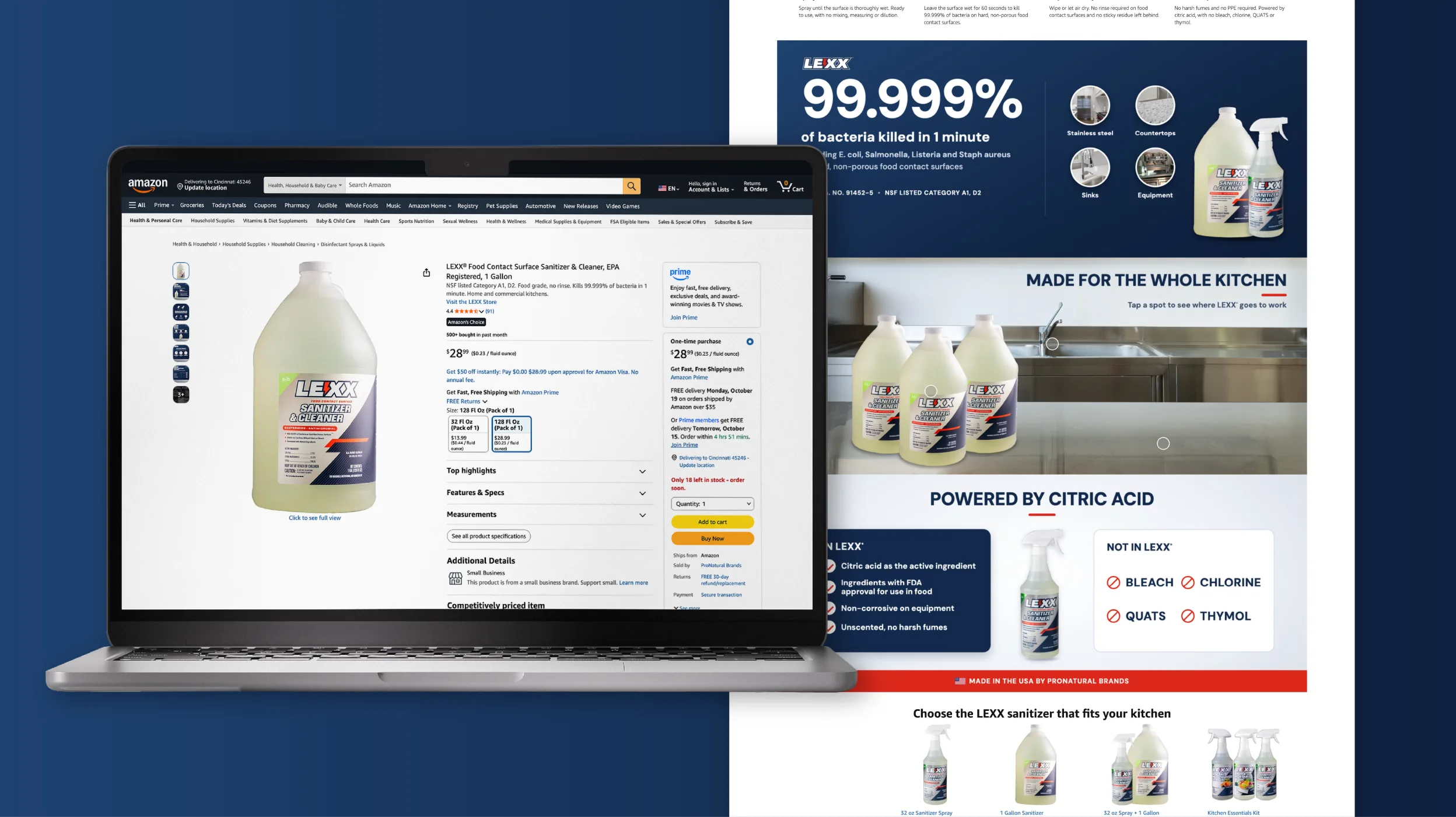
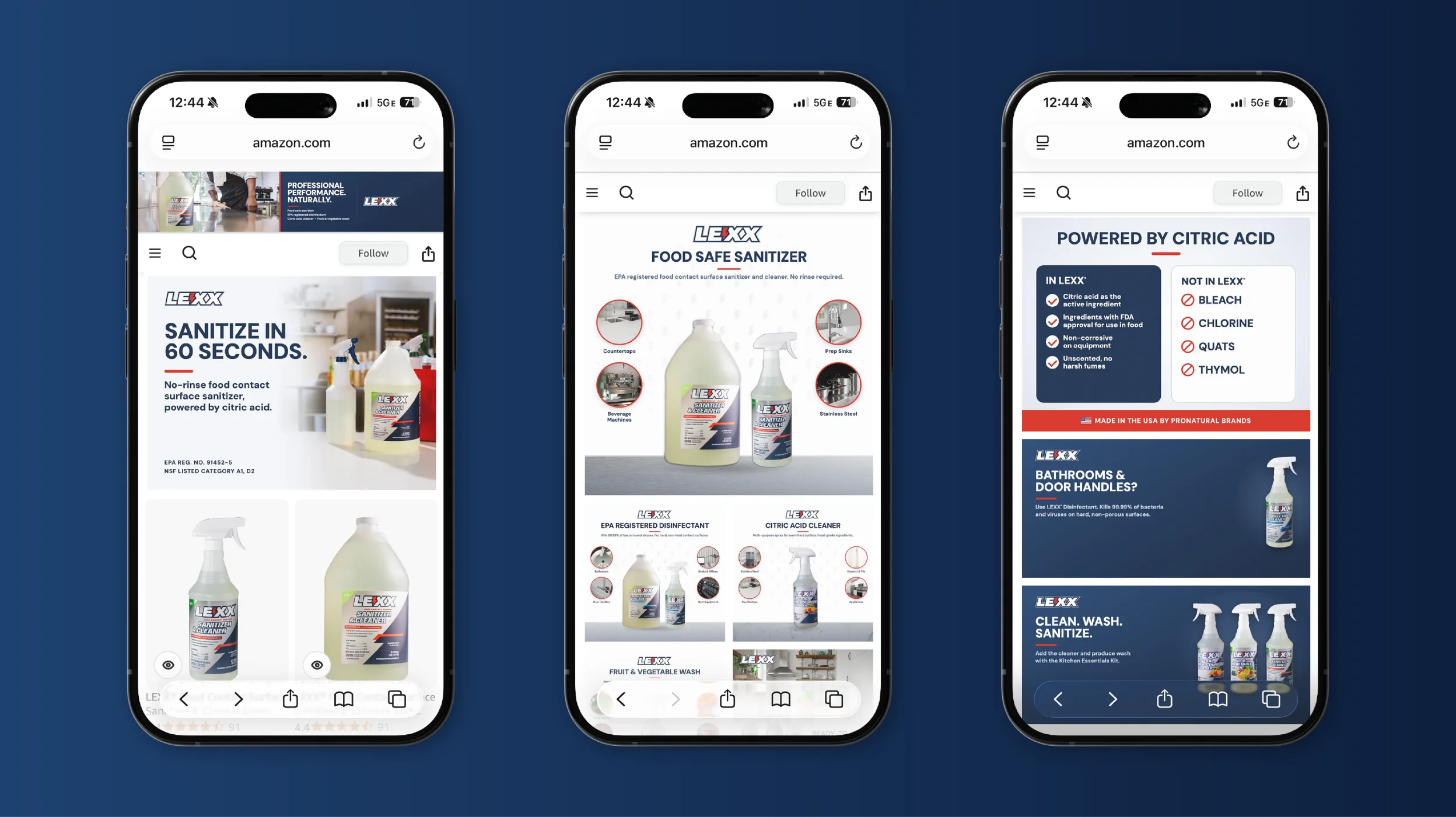
The products were never the problem. LEXX® is EPA registered, NSF listed, and trusted in some of the most demanding kitchens in the country. A no-rinse, food-safe sanitizer made from citric acid is exactly what home cooks, food trucks, cafés, and daycares are searching for, and few brands on Amazon could match its credentials.
The brand needed a direct channel built from the ground up: a website that could carry the regulatory story, listings that would clear Amazon’s review, products sized for home and small-business buyers, ads that paid for themselves, and a way to see what was working every week.
The company was also preparing to launch Forged High-Test™, a heavy-duty rust remover built on the same citric-acid chemistry, as a separate brand with its own look.
By March, return on ad spend had fallen to 0.4, and fewer than 7 in 100 shoppers who landed on a listing bought anything. The channel was losing money, and nothing in it explained why.
A regulated category
Amazon treats sanitizers and disinfectants as pesticides. Every listing, image, and claim has to clear a strict review before it can sell, and a single flagged word can pull a product offline. State registration rules also limit where a sanitizer can ship, so the claims that sell LEXX® to a hospital buyer could not simply be copied onto a listing.
The wrong format for the shopper
Gallon jugs make sense for a restaurant that refills spray bottles all day. For a home kitchen or a small café, they are a big commitment from a brand they have never heard of. The catalog had nothing a first-time buyer could try.
Ads without direction
The ad account spread its budget across broad cleaning searches where a commercial sanitizer could not compete on price or reviews, and the brand’s own products bid against each other. Clicks were expensive, and most of them never had a chance to convert.
No clear view of the business
Amazon’s data lives in separate places: Seller Central reports, the ads console, and bundle reports that arrive by email. The brand could not see in one place what was selling, what the ads were buying, or where the money was going week to week.
A second brand from zero
Forged had no listings, no reviews, and no sales history. It needed its own identity and its own audience in a rust-removal category far from commercial kitchens, without pulling budget or attention away from LEXX®.
Website & brand foundation
We built a new pronaturalbrands.com with product pages that link straight to Amazon through Amazon Attribution, so every click from the site can be tied to a sale. Market pages for food service, healthcare, education, hotels, daycare, and more speak to each buyer in their own terms. A safety data sheet library and full ingredient disclosure answer the questions procurement teams ask first, and analytics show which pages send shoppers to Amazon.
Sell sheets for every LEXX® product and for Forged round out the sales toolkit, giving distributors and B2B buyers the same story the website tells.
Amazon catalog
We launched Forged High-Test™ Rust Remover, LEXX® Fruit & Vegetable Wash, LEXX® Multi-Purpose Cleaner, and 32 oz sprays of the sanitizer and disinfectant, writing every listing to Amazon’s compliance rules with EPA registration numbers, NSF listings, and no restricted claims. When a listing was flagged, we handled the appeal and kept it selling.
The 32 oz spray was the turning point. It put a commercial-grade, no-rinse food contact sanitizer in a format a home cook or food truck owner could buy in one click. Premium A+ content for every ASIN, five Sponsored Brands videos, and a full rebuild of the LEXX® Amazon store gave shoppers the reasons to trust it.
Virtual bundles
Starting in June we built virtual bundles that pair the sanitizer with the products shoppers already buy alongside it: produce wash and sanitizer, cleaner and sanitizer, a Kitchen Cleaning Essentials set, and in October a sanitizer and disinfectant spray set. Bundles raise the order value without new inventory, and they introduce sanitizer buyers to the rest of the LEXX® line.
Advertising
Sponsored Products were rebuilt around the food contact sanitizer and the food-safe, no-rinse searches it wins. Those terms now return about 5x their spend. Product targeting keeps competitors off our own listing pages, and branded campaigns protect the searches shoppers make once they know the name.
The rest of the catalog is tuned so nothing competes with the star product, all within a fixed daily budget. As irrelevant clicks were cut, the average cost per click fell more than 60% from March to September.
A dashboard the client can open any time
Amazon spreads its data across Seller Central reports, the ads console, and bundle reports that arrive by email. None of them talk to each other. We built a custom reporting dashboard that brings all of it into one place: weekly business reports, daily ad data by search term, and daily bundle sales.
The client logs in with their own access and sees what we see. The overview opens with a plain-language summary of the week and the whole story since launch. A weekly sheet breaks out every product, the ad view drills into each campaign and search term, and every SKU has its own page with sessions, conversion, and sales over time. Each view exports to a PDF that can go straight into a leadership meeting.
It changed the conversation. Instead of waiting on a monthly recap, the client can check how the week is going, see exactly what we changed in the ad account, and see why. Every decision on this page, from shifting budget to the sanitizer to building bundles, came out of that data.
Operations behind the scenes
We handle fee and margin analysis for pricing and coupon decisions, FBA capacity planning so the bestsellers stay in stock, state registration restrictions that limit where a sanitizer can ship, and claims appeals when Amazon’s review gets it wrong.
Sales & momentum
Monthly Amazon sales grew 20x from January to September 2026, and units grew 35x across the LEXX® and Forged catalog. Traffic grew too, but conversion did more of the work: the share of visits that end in a purchase climbed from under 7% in March to above 30% by August, and held there.
The star product
The LEXX® Food Contact Surface Sanitizer family grew 23x and now drives most of the brand’s sales. The 32 oz spray converts about half of its sessions, and shoppers who find it in search buy at about 1.5x the market rate. It ranks first organically on the food-safe sanitizer searches that matter most and has held a top-100 rank in its Amazon category since late August.
Advertising efficiency
Return on ad spend rose from 0.4 in March to 3.4 in September on lower spend, and hit 4.2 in the first week of October, as budget moved to the products that convert. Ads now support the growth instead of buying it.
Bundles & order value
Virtual bundles went from launch to about 22% of revenue in three months and lifted average order value 14%.
New buyers & trust
Amazon Business buyers now make up roughly a fifth of sales, up from about one in ten in January. Reviews grew from 2 to 88 at a 4.4-star average.
Organic search
Organic Google impressions for pronaturalbrands.com grew about 10x from April to September once the new site and market pages went live, and clicks grew more than 5x. The daycare market page is now one of the site’s top entry points, and in early October the site posted its best average search position in more than a year.